Dead Horse Bay Environmental Cleanup Project
National Park Service, Gateway National Recreation Area
 Park Vibes
Views updated Oct 19, 2026, from YouTube
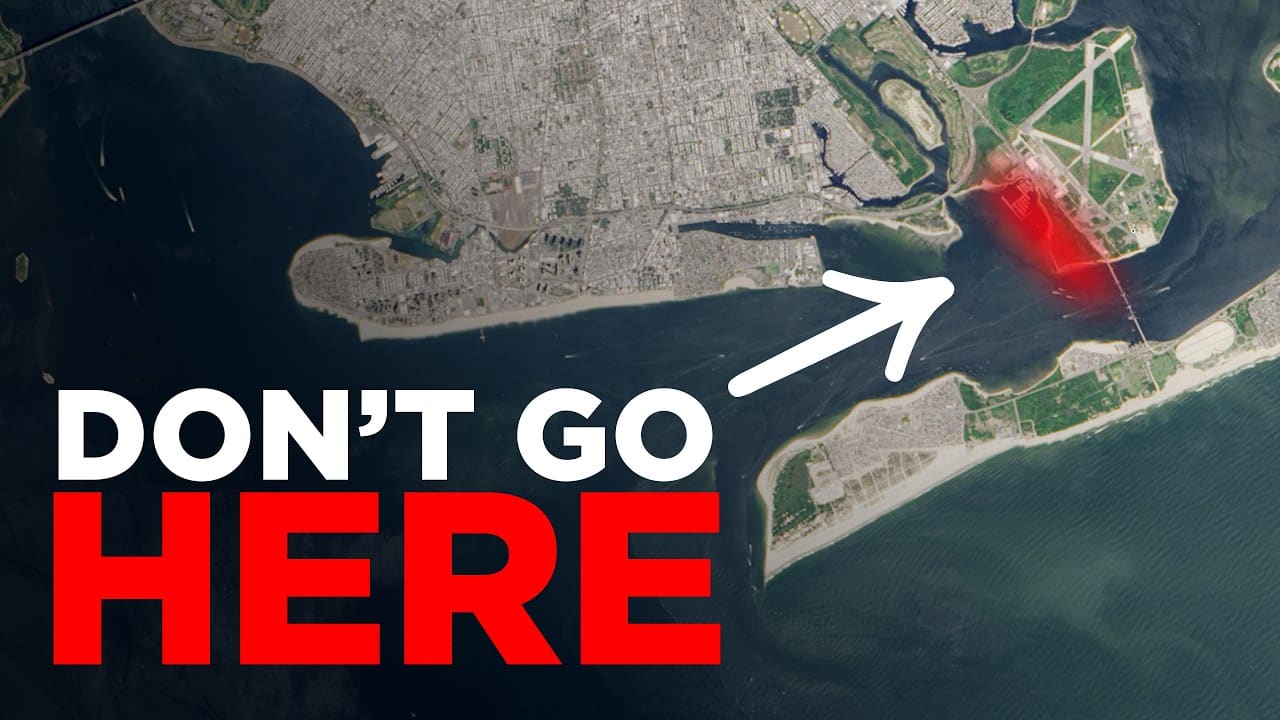
There's a beach in Brooklyn where 1950s trash literally washes up out of the ground, intact glass bottles, porcelain doll heads, ceramic plates, even horse bones from the 1800s. It's called Dead Horse Bay, and in 2020 the feds shut the whole thing down after discovering radioactive contamination buried in the landfill underneath. Five years later? Nothing's been cleaned up, the beach is still spilling history into Jamaica Bay, and nobody can say when (or if) that changes.
7 sources
13 claims
Every claim below links to the sources behind it. Peer-reviewed research and public records come first.
Radium-226 has a half-life of about 1,600 years.
Dead Horse Bay is part of Gateway National Recreation Area's Jamaica Bay Unit in Brooklyn; the shoreline is known as Glass Bottle Beach.
The island had a public school, a church and saloons.
The fill was described as compacted garbage under sand 1 to 2 feet thick.
The U.S. Army Corps of Engineers found PAHs, pesticides, PCBs and metals in site soils in 2002.
A 2019 NPS gamma walkover survey found 31 locations above ambient levels on the 178-acre site.
Two radium-226 deck markers had leaked, contaminating soil to about 2 feet.
NPS closed the southern ~84 acres, including the beach, in August 2020; it said the radiation was not a significant health risk but the full extent of chemical contamination is unknown.
Follow-up surveys in 2021 and 2023 found more elevated readings, and another 40 acres were closed.
Miriam Sicherman, a Brooklyn elementary school teacher, wrote the history of Barren Island.
At its height, Barren Island received 3,000 tons of garbage a day, making it the largest waste-reduction site in the world, and its stench could be detected four miles away.
From the late 1850s, rendering plants on Barren Island turned the city's dead horses into glue, fertilizer and other products, processing as many as 20,000 horses a year along with other dead animals.
From the 1930s to the 1950s, the city dumped garbage into the bay and covered it with soil to make new land, a project Robert Moses oversaw. The fill was poorly capped, and old refuse now spills out onto the shore.
National Park Service, Gateway National Recreation Area
National Park Service, Gateway National Recreation Area
U.S. Environmental Protection Agency
Hofmann, Sarah. Scienceline, 2026
Published March 12, 2026 (podcast transcript).
Kirk Johnson. The New York Times, 2000
Archived copy (Wayback Machine).
Brooklyn Paper, 2020
Urbanus, Jason. Archaeology Magazine (Archaeological Institute of America), 2018
New films and field notes. No spam.