ENSO Diagnostic Discussion, 9 July 2026
NOAA Climate Prediction Center, 2026
 Park Vibes
196K views
Views updated Oct 19, 2026, from YouTube
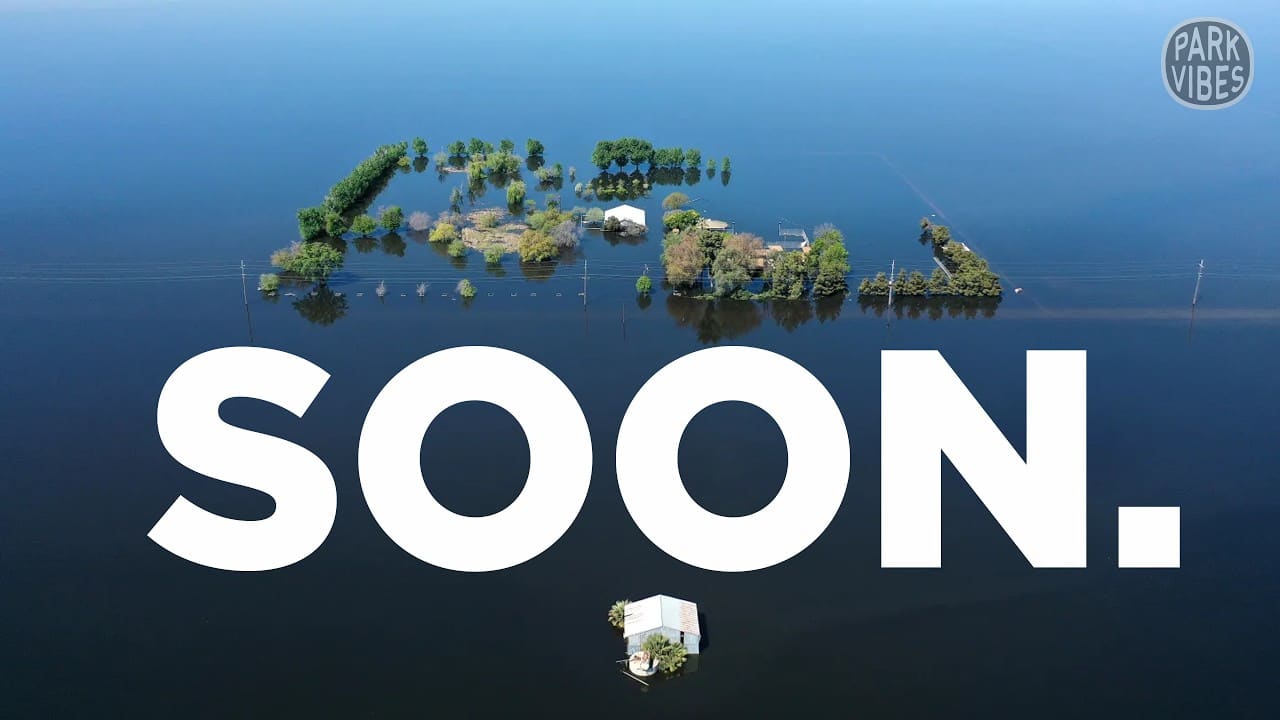
In California's Central Valley, farms grow cotton, tomatoes, and pistachios across ground that once held the largest freshwater lake west of the Mississippi. Then in 2023, water swallowed 175 square miles of that farmland — and by 2026, forecasters are warning it could happen again.
13 sources
18 claims
Every claim below links to the sources behind it. Peer-reviewed research and public records come first.
The Tachi name for the lake is Pa'ashi.
In high water the lake overflowed north toward the San Joaquin River, in 19 of 29 years from 1850 to 1878; by 1899 it was dry except for residual wetlands and occasional floods.
Floods prompted construction of Terminus, Success and Pine Flat dams on the Kaweah, Tule and Kings rivers.
A 14.5-mile levee protects Corcoran and a dual prison complex holding about 8,000 incarcerated men; a federal estimate put potential flood damage at $6 billion.
In 2023 the state funded raising the Corcoran levee about 4 feet, from 188 to 192 feet above sea level.
Robert Jeff, vice chairman of the Santa Rosa Rancheria Tachi Yokut Tribe, supports bringing the lake back ('Water brings life').
A conceptual proposal submitted to state officials in 2025 would acquire nearly 24,000 acres near Kettleman City for a lake with a 2,280-acre wetland zone and about five constructed islands, at a preliminary cost of nearly $1 billion; it could become a state park.
Landowners include Sandridge Partners (Vidovich family), J.G. Boswell Co. and the Los Angeles County Sanitation Districts (11,240 acres, nearly half); none had publicly endorsed it.
On July 9, 2026, NOAA's CPC gave an 81% chance of a very strong El Niño in October–December 2026, which would rank among the largest since 1950.
Daniel Swain reported that the August 2026 ECMWF forecast gave 70–100% odds of above-average California winter precipitation and of December–February ranking among the wettest 20% of winters.
Steve Haugen of the Kings River Water Association said El Niño has never been a sure thing, noting the 2015–16 'Godzilla' El Niño largely missed the central Sierra.
Engineer John Ennis says subsidence has shifted the lake bottom about seven miles south and east, and that 500,000 acre-feet could flood Corcoran and the prisons under 6 to 10 feet of water.
An Amec Foster Wheeler report found three flood zones near Corcoran merging, which could put the high-speed rail line under up to 16 feet of water in a major flood.
Ennis: 'It was fine when the lake bottom, and all the floodwater, was just Boswell's problem. But that's not the case anymore.'
In April 2024 the State Water Board placed the Tulare Lake Subbasin on probation, the first ever, citing subsidence among other issues; Corcoran's levees had been raised twice in a decade.
On June 9, 2026, the El Rico GSA voted to join a single subbasin-wide groundwater plan.
Tulare Lake was once the largest freshwater lake west of the Mississippi by surface area.
After upstream dams were completed, Tulare Lake partly reappeared in 1969, 1983, 1997 and 2023.
NOAA Climate Prediction Center, 2026
California State Water Resources Control Board, 2024
Press release dated April 15, 2024.
U.S. Environmental Protection Agency, 2007
Garrison, J., Rust, S., James, I.. Los Angeles Times, 2023
Published April 24, 2023.
Los Angeles Times, 2025
Published July 3, 2025.
Water Education Foundation, 2026
News digest item dated August 7, 2026. Aquafornia summary of a CBS Los Angeles report.
SJV Water, 2026
Published July 2026.
Solis, M.. SJV Water, 2026
Published June 11, 2026.
Soreath Hok. KVPR / Valley Public Radio, 2023
Bittle, Jake. Grist, 2023
Lund, Jay. California WaterBlog (UC Davis Center for Watershed Sciences), 2023
Says Tulare Lake disappeared after reservoirs were completed by 1961, except for partial flooding in 1969, 1983, 1997 and 2023.
New films and field notes. No spam.