Kahoʻolawe Island Reserve Commission: History
Kahoʻolawe Island Reserve Commission (State of Hawaiʻi)
Official timeline.
 Park Vibes
85.6K views
Views updated Oct 19, 2026, from YouTube
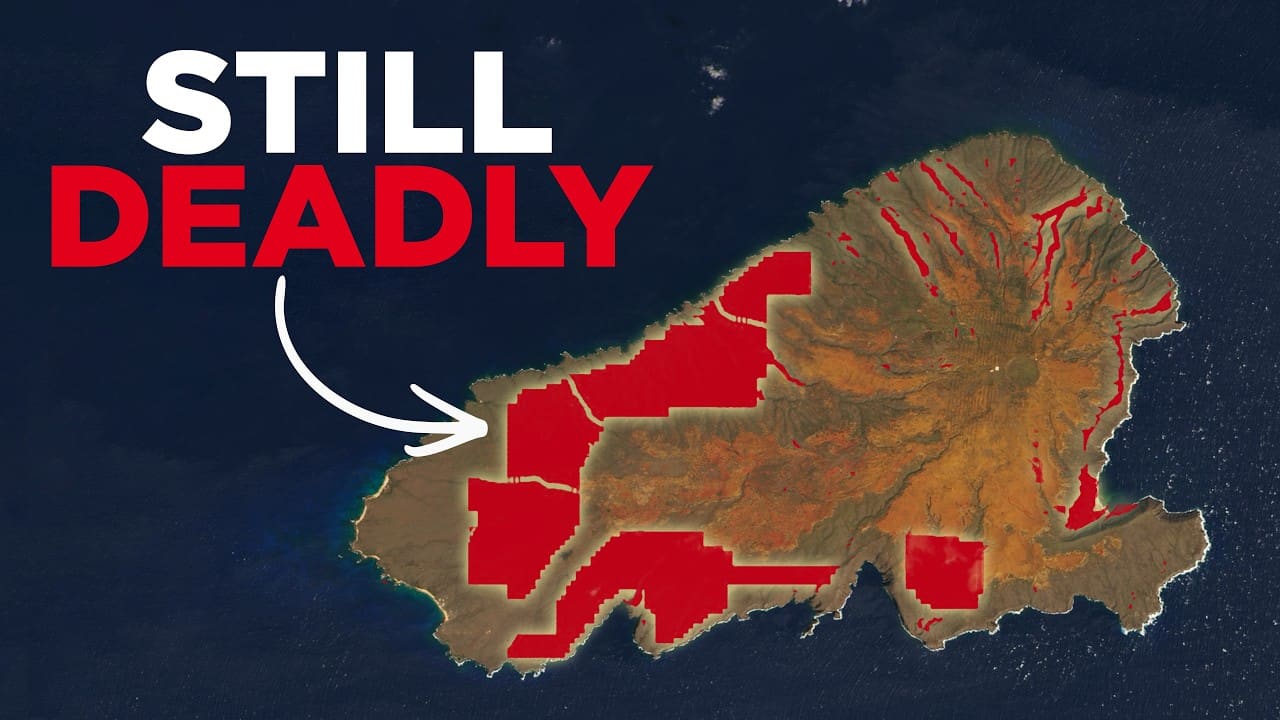
Six miles off the coast of Maui, there's an island you've probably flown directly over without knowing it existed. No ferry goes there. No resort has ever opened on its shore. It doesn't appear on a single tourist map. But it holds more than 3,000 archaeological sites, the largest stone tool quarry in Hawaii, and a place ancient navigators used to launch two-thousand-mile ocean voyages.
11 sources
16 claims
Every claim below links to the sources behind it. Peer-reviewed research and public records come first.
Goats were introduced to Kahoʻolawe in 1793 (a gift from Captain Vancouver to Chief Kahekili of Maui).
Kahoʻolawe is about 45 square miles.
Nearly 3,000 archaeological and historical sites and features have been inventoried; Hawaiians arrived as early as 400 AD.
The entire island is on the National Register of Historic Places (1981).
The island is venerated as a body form (kinolau) of the ocean god Kanaloa.
After Pearl Harbor the military took over the island for live-fire training; submarines fired torpedoes at the Kanapou cliffs.
Vietnam-era training used replica North Vietnamese surface-to-air missile sites; ordnance included high explosives, napalm, and rockets.
The National WWII Museum says the island has been called 'the most shot island in the world.'
President George H. W. Bush ordered an end to the bombing in 1990.
Congress authorized $400 million for ordnance removal (Title X, 1993); the Navy transferred title to the state in 1994, held for a future Native Hawaiian sovereign entity.
An estimated 500–600 feral cats eat seabird eggs and chicks; the AI/drone Sentinel project tested on the island is on hold for lack of funding.
About 1.9 million tons of soil erode from the island each year.
A KIRC turtle-nest excavation in 2024 confirmed the island's first honu nest: 87 hatchlings (95%) emerged.
A KIRC staffer called it 'the rebirth of Kahoʻolawe.'
George Helm was one of the Kahoʻolawe Nine who landed on the island in January 1976. Helm, then 26, and Kimo Mitchell disappeared at sea on March 7, 1977.
By law, the Kahoʻolawe reserve may be used only for traditional Native Hawaiian cultural, spiritual and subsistence purposes, environmental restoration, historic preservation and education.
Kahoʻolawe Island Reserve Commission (State of Hawaiʻi)
Official timeline.
Hawaiʻi DLNR, 2005
Hawaiʻi Department of Health, Clean Water Branch
Kahoʻolawe Island Reserve Commission, 2024
U.S. Navy
Copy of the Navy cleanup plan hosted by a third party (uxoinfo.com).
The National WWII Museum, 2021
Published November 20, 2021.
Hawaii News Now, 2024
University of Hawaiʻi System News, 2026
Uechi, Colleen. The Maui News, 2017
Sacred Land Film Project
Kumukahi
New films and field notes. No spam.