Comparative genomics of mortal and immortal cnidarians unveils novel keys behind rejuvenation
Pascual-Torner M, Carrero D, Pérez-Silva JG, et al.. PNAS, 2022
The same query returns the 2023 reply to Miglietta.
 Pack Vibes
0.5K views
Views updated Oct 19, 2026, from YouTube
7 sources
9 claims
Every claim below links to the sources behind it. Peer-reviewed research and public records come first.
A 1996 paper by four researchers, Piraino, Boero, Aeschbach and Schmid ('Reversing the life cycle'), documented life-cycle reversal.
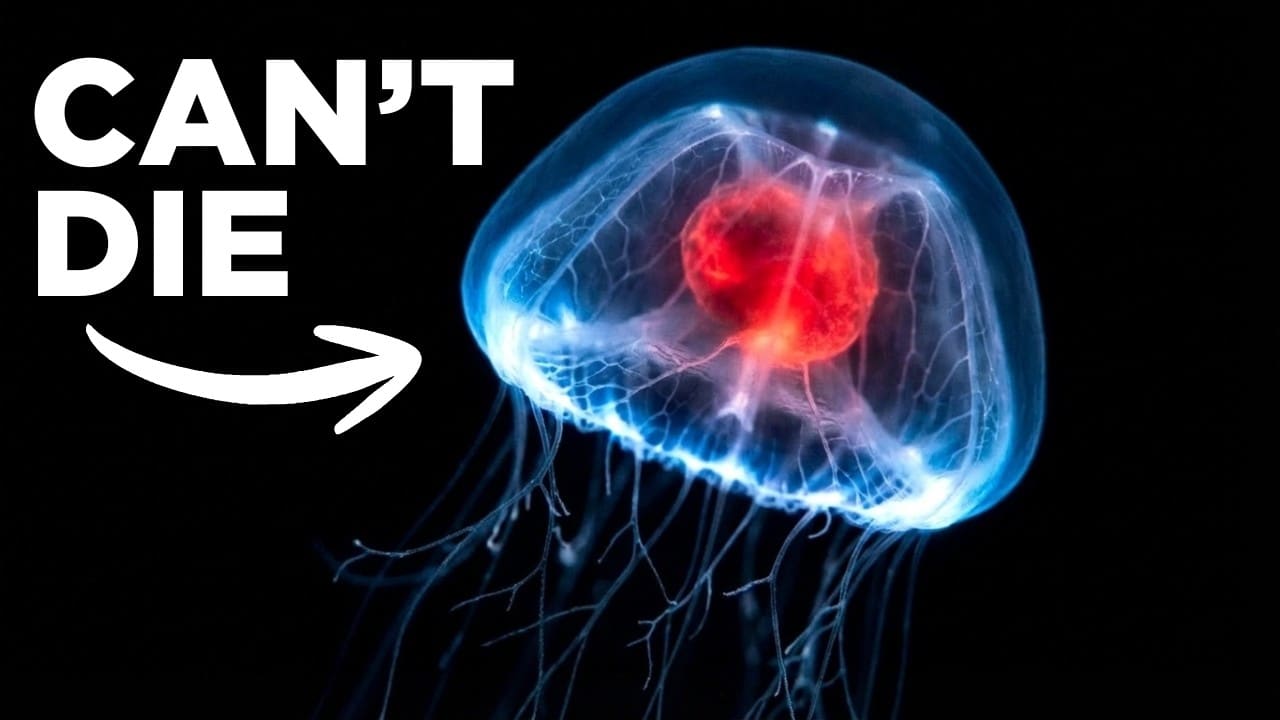
When damaged, stressed or aging, the medusa transforms into a cyst in which cells transdifferentiate, then becomes a polyp again.
The species is believed to be spreading worldwide through ballast water; Maria Miglietta called it 'a worldwide silent invasion'.
Texas A&M-linked researchers (Matsumoto, Piraino, Miglietta) compared transcriptomes of the polyp, medusa and cyst stages.
In 2022 Pascual-Torner and colleagues published comparative genomes of T. dohrnii and the non-immortal T. rubra in PNAS.
The 2022 study found gene variants and expansions linked to DNA repair and telomere maintenance, and pluripotency targets activated during life-cycle reversal.
Miglietta published a critique in PNAS in 2023, and Pascual-Torner and Quesada replied.
A 2008 study comparing immortal jellyfish from Spain, Italy, Japan, Florida and Panama found that all the genes examined were identical.
Adult Turritopsis dohrnii reach only about 4.5 mm and have a bright red stomach.
Pascual-Torner M, Carrero D, Pérez-Silva JG, et al.. PNAS, 2022
The same query returns the 2023 reply to Miglietta.
Matsumoto Y, Piraino S, Miglietta MP. G3 (Bethesda), 2019
Miglietta MP. PNAS, 2023
Pascual-Torner, Maria; Carrero, Dido; Pérez-Silva, José G.; et al.. PNAS, 2022
The Times, 2009
Archived copy (Wayback Machine).
Than, Ker. National Geographic, 2009
EBSCO Research Starters
New films and field notes. No spam.