Justyn, N.M.; Nallapaneni, A.; Parnell, A.J.; et al.. Biological Journal of the Linnean Society, 2022
135(1). White Rose repository record.
Views updated Oct 19, 2026, from YouTube
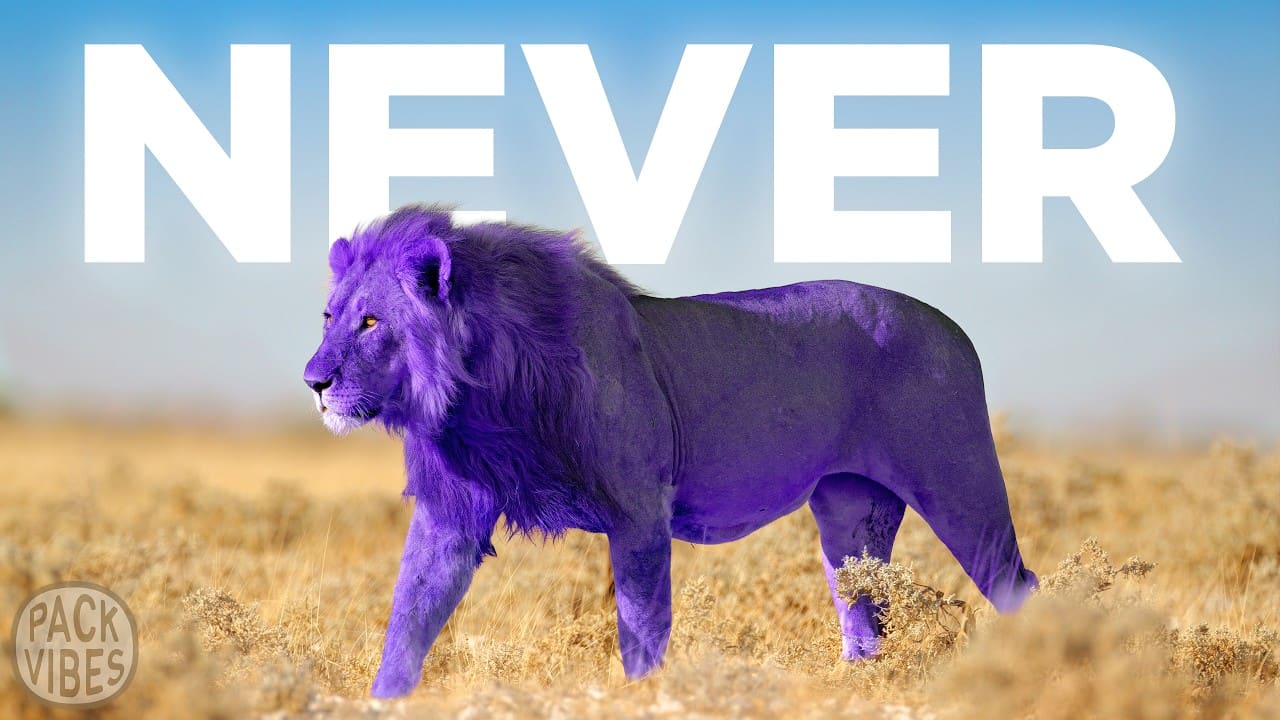
The rarest color in the animal kingdom isn’t blue – it’s purple (or technically, violet.) Evolution makes color using pigments, chemical structures that reflect some color and absorb others, and physical structures. Violet is too energetic for pigment chemistry that animals use to reflect it, and the structures that reflect it are so finicky that the tiniest tweaks will reflect blue instead.
5 sources
6 claims
Every claim below links to the sources behind it. Peer-reviewed research and public records come first.
Animals produce color with pigments and with microscopic structures (structural color); peacock feather iridescence is structural.
The purple-breasted cotinga's purple comes from a keratin–air nanostructure that scatters blue-green light combined with the carotenoid pigment cotingin, without melanin.
Male purple emperors have a purple-blue iridescent sheen that females lack.
Only the male purple emperor's upper wings carry the specialized scales, whose reflection peaks at around 380 nm within an angle of about 18°.
For more than a century, the mandrill's blue skin color was attributed to Tyndall scattering.
Purple, unlike violet, is not a spectral color: it has no single wavelength and is perceived as a mix of red and blue.
Justyn, N.M.; Nallapaneni, A.; Parnell, A.J.; et al.. Biological Journal of the Linnean Society, 2022
135(1). White Rose repository record.
Pantelić, D; Curčić, S; Savić-Šević, S; Korać, A; et al.. Optics Express, 2011
PMID 21451606.
Prum, RO; Torres, RH. The Journal of Experimental Biology, 2004
PMID 15143148.
Philip Ball. Scientific American
Live Science
UK Butterflies
New films and field notes. No spam.